

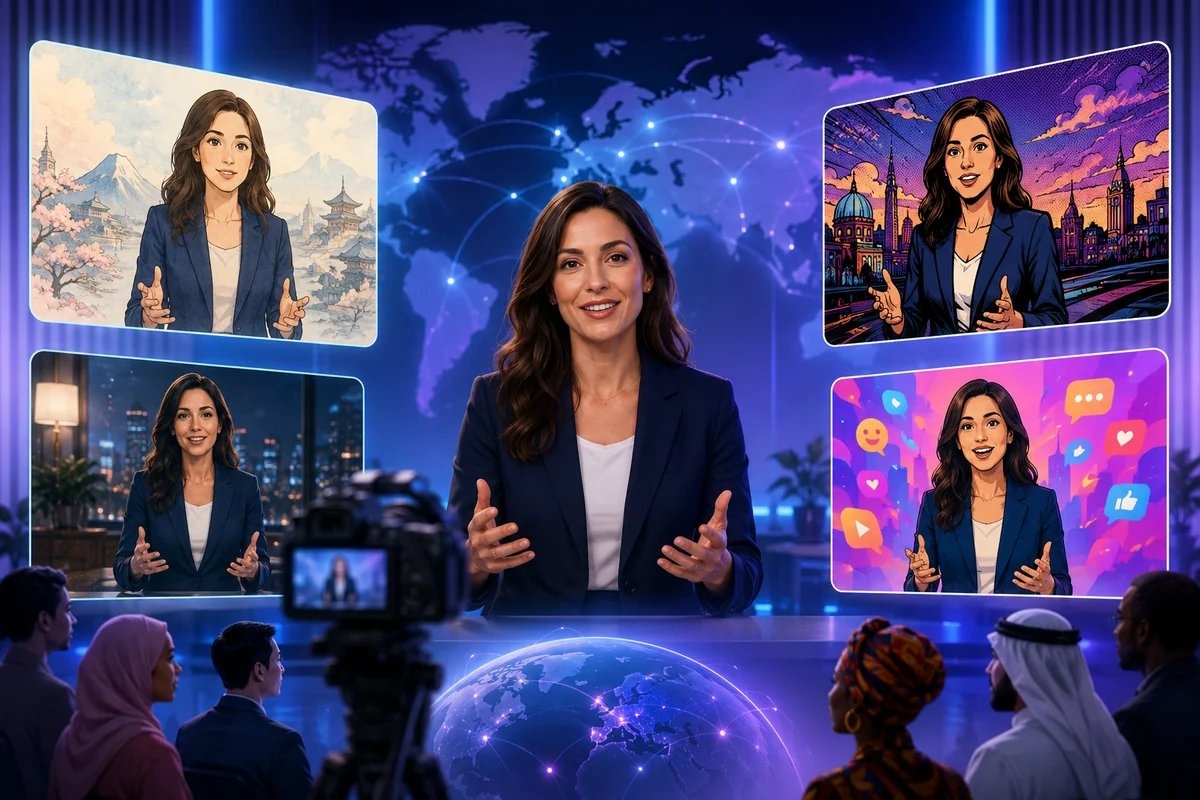
GoEnhance AI Brings Visual Localization 1
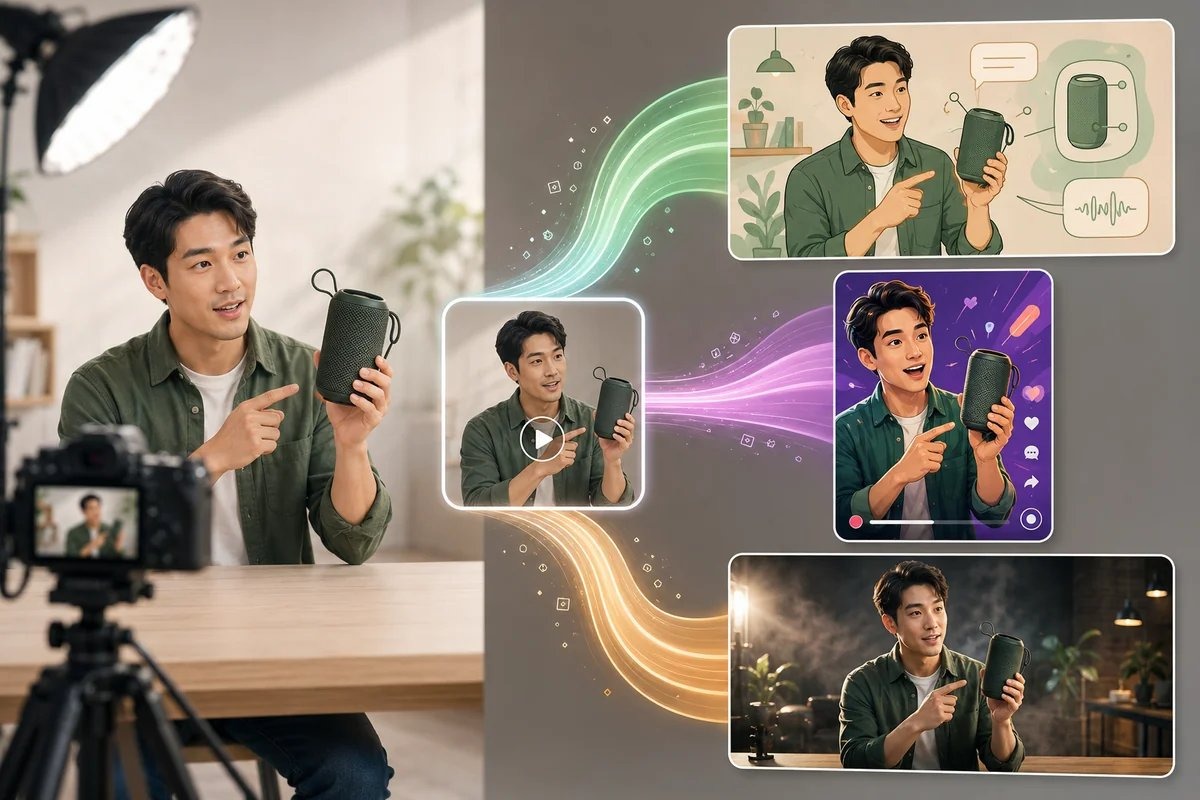
GoEnhance AI Brings Visual Localization 2
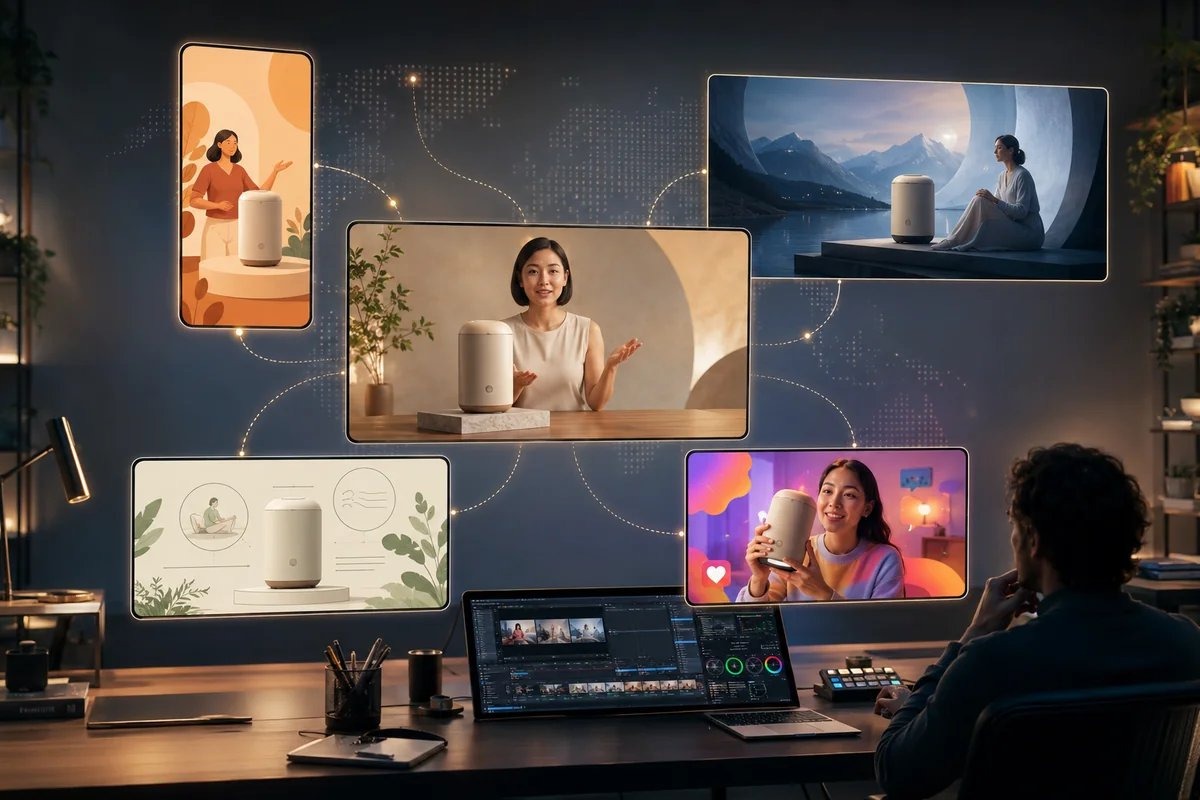
GoEnhance AI Brings Visual Localization 3
Learn how visual localization helps brands adapt existing video footage for different markets, audiences, platforms, and creative goals with AI.
SHERIDAN, WY, UNITED STATES, August 23, 2026 /EINPresswire.com/ — GoEnhance AI is positioning AI-assisted video transformation as a new layer of localization: visual localization. The approach allows creators to retain the performance, movement, and structure of an existing video while changing its artistic presentation for different audiences, campaign goals, and content environments.
GoEnhance AI is an online platform for generating, transforming, and enhancing images and videos with AI. Its tools help creators produce new visual content from existing footage, images, or text prompts.
Visual localization extends the value of a recorded clip beyond its original appearance. A product demonstration filmed in a simple studio can be adapted into an illustrated explainer for education, a bold animated clip for social media, or a cinematic treatment for a campaign launch. The message and movement remain recognizable, while the visual language changes.
For businesses operating across several regions, this offers an alternative to repeatedly filming the same scene. Independent creators can also present familiar footage in a style suited to a specific community or platform.
1. Video Localization Is Moving Beyond Words
Localization teams have long adjusted language, dates, measurements, cultural references, and calls to action. Visual expectations also vary.
An animation style that feels appropriate for a youth-oriented campaign may be too playful for a professional training video. A highly polished commercial aesthetic may work for a product launch but feel overly formal on a short-form social platform. A detailed cinematic sequence may lose clarity when viewed on a small mobile screen.
As a result, a technically translated video may still feel designed for a different audience. Visual localization addresses this gap through illustration style, texture, realism, color intensity, background complexity, pacing, and subject separation.
The purpose is not to create market stereotypes, but to recognize that viewers encounter content in different contexts. Visual language should support whether the content is an advertisement, lesson, entertainment clip, or professional presentation.
A single visual identity can connect all versions. Brands may retain recognizable colors, products, characters, or compositions while adapting the treatment for each audience.
2. One Performance Can Be Reinterpreted for Several Audiences
Recorded footage contains information that is difficult to recreate through written prompts alone. It captures body language, timing, facial expression, product interaction, camera movement, and the relationship between subjects.
These elements often represent the most valuable part of a production. A presenter may deliver a clear explanation, a dancer may complete a precise performance, a product may be shown from the correct angle, or a teacher may demonstrate an easy-to-follow process. Reshooting only to change the artistic appearance can add cost without improving communication.
AI-assisted transformation allows the original performance to remain the reference.
A brand can begin with one approved recording and explore several visual versions. The realistic source may remain suitable for a website, while a simplified animated version is used for social media. An illustrated treatment may support educational content, and a more cinematic version may be selected for a campaign teaser.
The footage becomes a reusable performance asset. Many organizations already have underused demonstrations, interviews, and performances whose original styling no longer fits a new campaign. Visual transformation adapts the presentation while preserving useful content.
3. Animation Can Make the Same Message Feel More Accessible
Animation changes the emotional distance between a viewer and a subject. A realistic video may feel direct and authoritative, while an illustrated version can feel more approachable, imaginative, or informal.
This can be useful when a creator needs to communicate the same idea to audiences with different expectations.
An educational organization may have a live-action demonstration for adult learners and use a simplified animated treatment to engage younger viewers without changing the core steps. A financial company, software brand, or musician can similarly adapt selected scenes for social channels or a specific release.
Using an AI video to animation converter, creators can reinterpret live-action clips as animation while continuing to use the movement and composition of the original footage as a reference.
Animation is not simply a decorative filter. It can reduce visual detail, emphasize expressions, make movement more noticeable, or place a familiar action in a more imaginative world.
The animation style should follow the communication goal. Soft illustration may suit family, wellness, or educational content, while stronger outlines and contrast may fit gaming, music, sports, or entertainment.
Creators should consider the final display size. Details visible on a desktop may disappear in a vertical mobile video, where recognizable silhouettes and clear expressions may matter more than an elaborate background.
4. Visual Localization Can Reduce Repetitive Production Work
Traditional localization can require several versions of the same campaign. When visual treatment is included, the workload may expand further.
A company could organize separate shoots for each audience, rebuild scenes through animation, or ask an editing team to manually develop several treatments. These approaches remain appropriate for high-budget productions, but they are not always practical for frequent digital publishing.
AI transformation creates another option.
Instead of beginning every version from an empty timeline, teams can begin with approved source footage. The performance, product position, and camera direction are already established. The creative task becomes one of reinterpretation rather than complete reconstruction.
This can be especially useful during concept development. Before commissioning a full animated campaign, a team can transform a short section of footage and evaluate how the direction works in motion.
The same process can support internal review. Designers, marketers, regional teams, and clients can compare visual approaches using a real performance rather than relying only on static mood boards.
Not every test needs to become a published asset. A style that distracts from the product or weakens the message can be rejected before larger production resources are committed.
5. Video-to-Video Generation Connects Filming and AI Production
Video-to-video generation occupies a practical space between conventional filming and fully generated video.
The creator still controls the source performance. A person can deliver the intended expression, handle a product correctly, or complete a specific movement. The camera can be positioned deliberately, and the scene can be timed according to the final message.
AI is then used to reinterpret the visual presentation.
A video to video generator allows users to start from an existing clip and explore a different aesthetic while using the original motion and composition as a structural reference.
This makes visual localization more manageable because regional or platform-specific teams can focus on how the footage should feel instead of describing every action from the beginning.
One market may respond to a clean illustrated look. Another campaign may require a more cinematic or expressive style. A social version may use stronger visual contrast, while a training version remains simple and readable.
The underlying clip creates continuity across these versions.
This continuity can be important for brands that want localization without losing recognition. The same spokesperson, product demonstration, character movement, or scene structure can appear across several treatments.
Teams can maintain consistent timing when an approved voiceover or subtitle sequence is already in place. The process works best with one central subject, one readable action, and stable lighting.
6. Different Platforms Require Different Visual Decisions
Visual localization is not limited to geography. Content also needs to be localized for the environment in which it appears.
A video designed for a company website may use measured pacing, subtle movement, and detailed imagery. That treatment may not hold attention in a fast-moving social feed.
Short-form platforms often reward immediate visual clarity. The main subject needs to be recognizable quickly, even when the video is viewed without sound. Strong silhouettes, readable expressions, and a clear first action can be more important than complex scene design.
Educational platforms have different requirements. Viewers may need to observe a sequence closely, which means that objects and gestures should remain stable. A dramatic style transformation may look impressive but reduce instructional value if important details change.
Advertising introduces another set of priorities. The product, benefit, and call to action need to remain clear while the visual treatment attracts attention.
Visual localization allows the same source material to be adapted according to these conditions.
A long-form tutorial can remain realistic while a promotional excerpt becomes animated. A corporate interview can stay conventional on a website and become a graphic social teaser.
This treats platform format as part of localization rather than a final resizing task. Aspect ratio, crop, pace, detail, and visual intensity should be considered before transformation.
7. Style Transfer Can Adapt Mood Without Changing the Message
Two videos can communicate the same information while creating very different emotional responses.
A realistic scene may feel immediate. A watercolor treatment may feel reflective. A comic-inspired version can introduce energy. A handcrafted or miniature appearance may make the content feel playful and memorable.
These differences can be used strategically.
Through video style transfer, users can apply new artistic treatments to existing clips while retaining the central subject and movement of the source material.
For visual localization, this means the message does not need to be rewritten every time the desired mood changes.
A tourism campaign could present the same walking sequence as a realistic destination clip, an illustrated travel story, or a cinematic concept video. A wellness brand could adapt one demonstration into a calm educational version and a more expressive social campaign.
Style transfer can also update older footage that remains factually useful but looks dated, without requiring the original participants to repeat the recording.
The style should remain appropriate to the subject. Highly abstract treatment may work for music or entertainment but interfere with a technical demonstration. Strong textures may add visual interest while making small products difficult to recognize.
The purpose of localization is not to make every version visually extreme. It is to make the treatment more suitable for the intended viewer and context.
8. A Visual Localization Brief Should Define What Cannot Change
Creative freedom is most useful when the important constraints are clear.
Before transforming a clip, teams should identify the parts that must remain recognizable. These may include the shape of a product, the movement of a performer, the expression of a speaker, the sequence of a demonstration, or the position of a brand element.
The brief can then describe what is allowed to change.
This may include the artistic medium, environmental styling, level of realism, lighting mood, color intensity, background detail, or overall atmosphere.
Defining these boundaries helps reviewers determine whether a version preserves required information and supports the target audience.
A practical visual localization brief may include the intended market or platform, audience age, communication goal, desired mood, final aspect ratio, and protected visual elements.
It may also identify risks. Faces, hands, text, logos, and product details often require additional review because small inconsistencies can become noticeable during playback.
Organizations can document approved styles, acceptable transformations, and source-footage guidance to make experimentation more repeatable.
9. Human Review Remains Essential for Localized Video
AI-assisted transformation can accelerate creative work, but it does not remove the need for review.
A transformed video should be watched as a full sequence. A single frame may look correct while later frames introduce changes to facial features, clothing, products, or background objects.
Normal-speed playback helps reviewers judge the overall experience, while slow playback can reveal instability.
Commercial teams should pay particular attention to brand-sensitive details. Product shapes, packaging, trademarks, and written text must remain accurate when the video is used for advertising or e-commerce.
Regional reviewers can also evaluate whether the visual treatment is appropriate for the intended audience. A style that appears engaging to the central production team may create an unintended impression in another market.
Rights and consent remain part of the workflow. Users should have permission to upload, modify, and distribute the source footage. Transforming a video does not remove the rights of performers, creators, or owners of protected material.
Clear labeling may be appropriate when a transformed video could be mistaken for unedited documentation.
Visual localization should strengthen communication, not obscure the origin or meaning of the material.
10. Existing Footage May Become a Long-Term Localization Asset
Organizations often store years of footage from product launches, training sessions, events, interviews, and campaigns. Much of this material becomes inactive after its original use.
Visual localization creates a reason to review these libraries again.
A clear product demonstration may still be useful even if its background or editing style feels outdated. An interview may contain a valuable explanation that could be adapted into an illustrated social clip. A performance recorded for one campaign could support a new creative direction.
This changes how teams can think about the return on a video shoot.
The source recording does not need to serve only one campaign. When movement and composition are captured clearly, the footage may support future versions for different platforms, markets, seasons, and audience segments.
New productions can support this flexibility by capturing clean clips with clear subject separation, stable lighting, and enough framing space for several aspect ratios.
The result is a modular production model: filming captures the performance, localization adjusts language and messaging, visual transformation adapts appearance, and editing prepares the channel-specific version.
11. Visual Localization Adds a New Layer to Global Content Strategy
The growth of international and multi-platform publishing has made localization a continuous process rather than a final step.
A video may need to communicate across languages, cultures, audience groups, and digital environments. Translating the words remains essential, but the visual presentation also influences whether the content feels relevant.
GoEnhance AI’s video transformation tools provide creators and businesses with a way to explore this additional layer.
By beginning with existing footage, users can preserve approved performances and recognizable movement while testing different visual directions. Animation, video-to-video generation, and style transfer can each support a different localization goal.
The goal is not to create as many versions as possible, but to produce the right version for each audience.
A useful localized video should still feel connected to the original brand or creator. It should maintain the information that matters, adapt the presentation where appropriate, and respect the context in which viewers will encounter it.
Visual localization may become a standard consideration alongside subtitles, voiceovers, aspect ratios, and regional messaging.
12. About GoEnhance AI
GoEnhance AI is an online AI platform for video and image generation, transformation, and enhancement. The platform helps creators, marketers, educators, agencies, and production teams develop visual content from text, images, and existing footage.
Its video tools support animation conversion, video-to-video transformation, artistic style transfer, and other creative workflows for marketing, education, entertainment, social media, and digital storytelling.
Irwin
MewX LLC
+1 307-533-7137
email us here
Visit us on social media:
LinkedIn
YouTube
X
Legal Disclaimer:
EIN Presswire provides this news content “as is” without warranty of any kind. We do not accept any responsibility or liability
for the accuracy, content, images, videos, licenses, completeness, legality, or reliability of the information contained in this
article. If you have any complaints or copyright issues related to this article, kindly contact the author above.
 Topic / Business & Economy, Topic / Social Media, Topic / Technology, Topic / Media, Advertising & PR, Topic / Companies, Country / United Kingdom, Country / United States, State / Wyoming
Be First to Comment