

CallRadius LSA
Google Local Service Ads
Google Local Service Ad Management
Google’s August 2026 transition moves Local Services Ads into Performance Max as CallRadius adds campaign detection, reporting and budget controls.
SCOTTSDALE, AZ, UNITED STATES, August 3, 2026 /EINPresswire.com/ — CallRadius today announced platform updates developed for Google’s phased migration of existing Local Services Ads campaigns into specialized Performance Max campaigns with pay-per-lead goals. The first phase begins in August 2026 for select U.S. home and storefront service advertisers.
The updates add migration-aware campaign detection, preserve independently stored performance history, limit optimization during the post-migration stabilization period and block budget changes until the new campaign path has been verified.
Google is changing how Local Services Ads are managed, not where they appear or how advertisers are charged. According to Google’s published migration guidance, the campaigns will remain pay-per-lead, keywordless and limited to Google Search and Google Maps. After migration, however, campaign management moves from the standalone Local Services Ads dashboard into Google Ads.
Once an account migrates, the former dashboard will redirect to the Google Ads campaign overview. Previous campaign-level performance reports, including historical impressions, clicks, weekly spend and ad-level performance, will not carry over. Past customer leads, contact details, message history and older call recordings will transfer to Lead Manager in Google Ads.
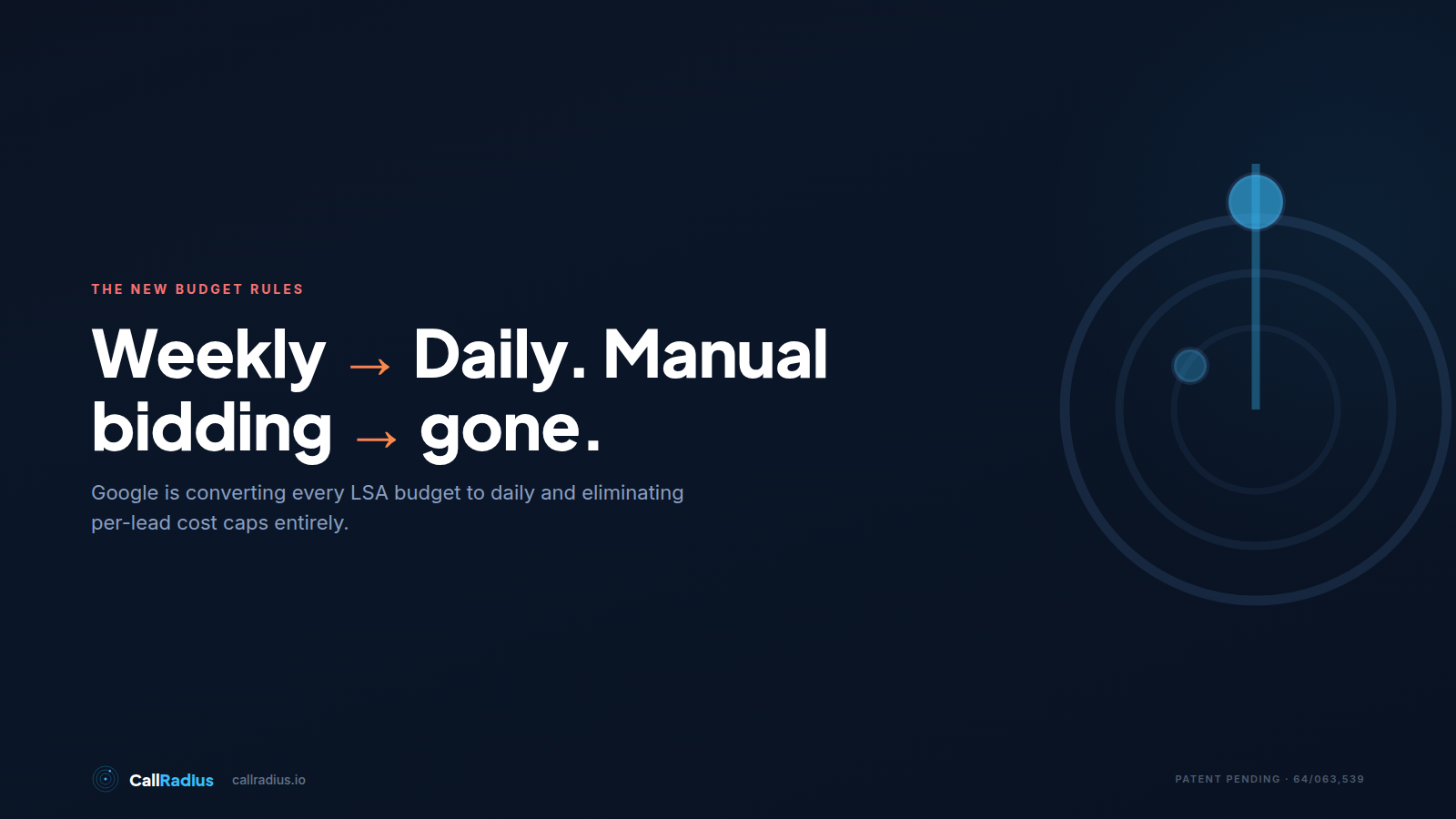
Google will also convert historical average weekly budgets into daily average budgets by dividing the weekly amount by seven. Manual maximum cost-per-lead bidding and vertical-level Target CPA settings will be retired, with a unified campaign-level Target CPA calculated and applied instead. Google Verified status will carry over, while Better Business Bureau callouts will no longer be supported.
“Google is not ending Local Services Ads or changing the pay-per-lead model. It is replacing the management and reporting layer that many businesses and agencies depend on,” said Carl Smith, President at CallRadius. “The largest risks are losing access to historical reporting, relying on an integration that no longer recognizes the campaign and making budget decisions before performance has stabilized.”
Why the Campaign Architecture Matters
Before migration, a Local Services Ads campaign is identified through the LOCAL_SERVICES advertising channel type. After migration, it becomes a Performance Max campaign identified through a Local Services setting. An integration that searches only for the original campaign type may no longer detect the campaign after conversion.
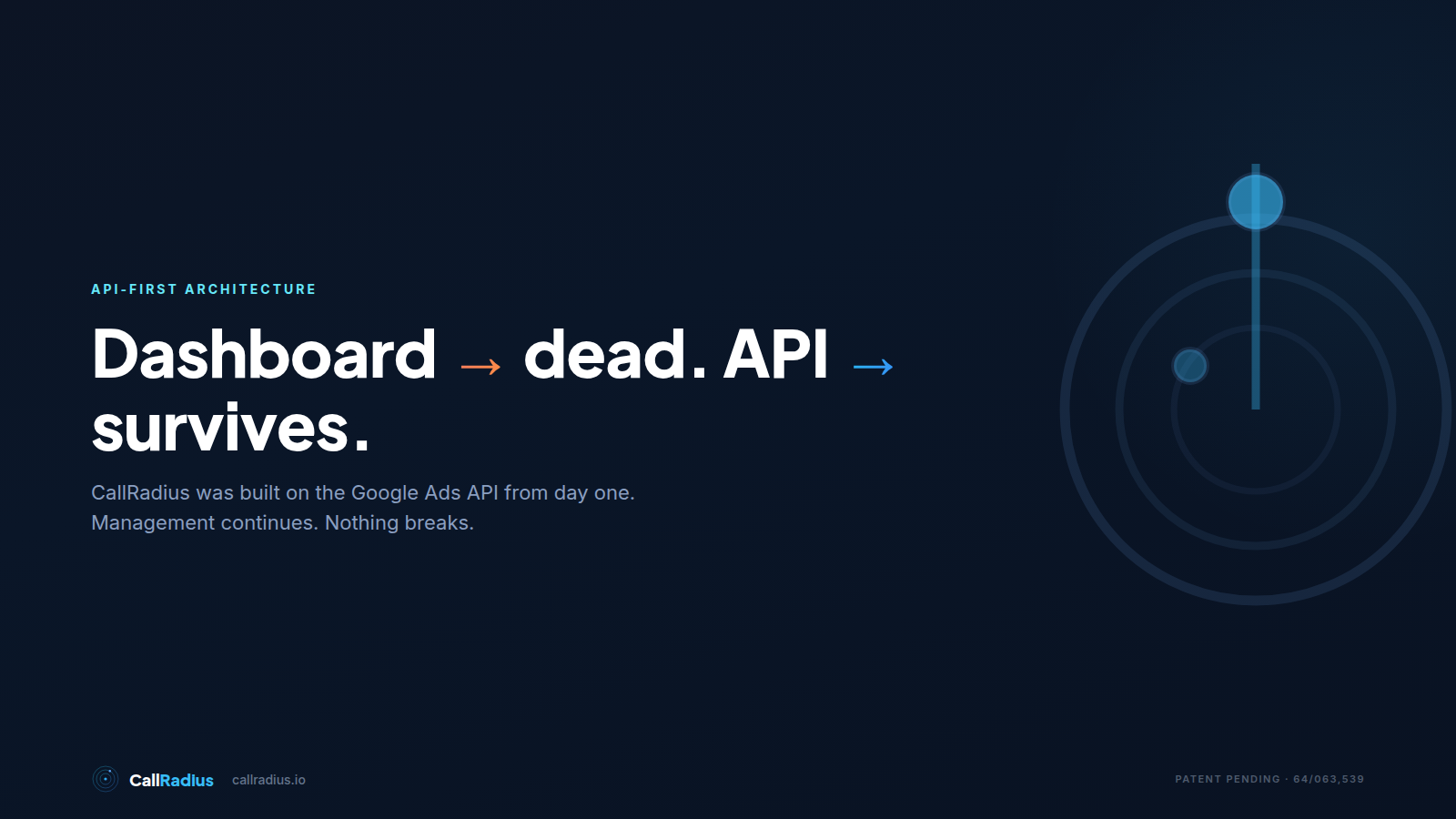
CallRadius was built on the Google Ads API rather than the standalone Local Services Ads dashboard. Even so, the migration required the platform to recognize both campaign structures. CallRadius rewrote campaign discovery so budget management, reporting and optimization functions can route through the correct campaign before and after migration.
The company also added four migration controls:
Dual-path campaign discovery identifies both the original Local Services campaign and the migrated Performance Max campaign.
Independent reporting history continues using daily performance data stored in CallRadius rather than relying solely on Google’s retiring historical reporting interface.
A migration stabilization hold limits automated optimization during the period in which Google says performance may take up to two weeks to return to stable levels.
A verification gate prevents a budget change from being written until the migrated campaign path has been confirmed.
Google’s current API documentation supports identifying and updating certain existing Local Services Performance Max campaigns. Campaign creation through the API is not yet supported, and updates are currently limited to eligible campaigns created through the Google Ads interface.
CallRadius is not assuming that every pre-migration metric will remain available. If an input used by the platform’s LSA Score becomes unavailable, the score will be reweighted around the remaining inputs rather than treating missing data as a zero. Lead feedback will remain available through Lead Manager, but CallRadius plans to validate credit-recovery behavior against live migrated accounts.
Migration Schedule and Advertiser Preparation
Google says account administrators will receive an email 14 days before migration, another reminder seven days later and a completion notice after the conversion. The August 2026 phase includes select U.S. advertisers in categories such as plumbing, HVAC, electrical, appliance repair, house cleaning, lawn care, roofing, pest control and moving. Broader advertiser groups are scheduled for later in 2026, followed by non-U.S. accounts and remaining categories in 2027.
Before migration, advertisers and agencies should export historical LSA reports, review the daily budget created from the weekly average, confirm core Google Business Profile information and avoid unnecessary changes during the stabilization period. Significant updates to a business name, storefront address or primary category may trigger a 24- to 48-hour verification review and temporarily pause the campaign.
About CallRadius
CallRadius is a software platform for managing and optimizing Google Local Services Ads. It provides performance reporting, budget oversight, lead management and automation for home-service businesses and agencies
Carl Smith
CallRadius
+1 866-927-1855
email us here
Visit us on social media:
LinkedIn
Instagram
Facebook
YouTube
X
Legal Disclaimer:
EIN Presswire provides this news content “as is” without warranty of any kind. We do not accept any responsibility or liability
for the accuracy, content, images, videos, licenses, completeness, legality, or reliability of the information contained in this
article. If you have any complaints or copyright issues related to this article, kindly contact the author above.
 Topic / Social Media, Topic / Technology, Topic / Building & Construction Industry, Topic / Media, Advertising & PR, Topic / Companies, Country / United Kingdom, Country / United States, State / Arizona
Be First to Comment